
Why Proper Splint Margins Matter: Comfort, Retention, and Better Bruxism Therapy

When designing an occlusal splint digitally, one of the most overlooked factors is margin placement. A splint can have perfect occlusion and still feel bulky, uncomfortable, or unstable simply because the margins are poorly designed.
Modern digital workflows using intraoral scanners and CAD software have made splint fabrication far more accurate, but comfort still depends heavily on how the splint interfaces with the soft tissues and teeth.
Research and clinical examples from published splint designs consistently show that conservative, anatomically shaped margins provide the best balance between retention and patient comfort.
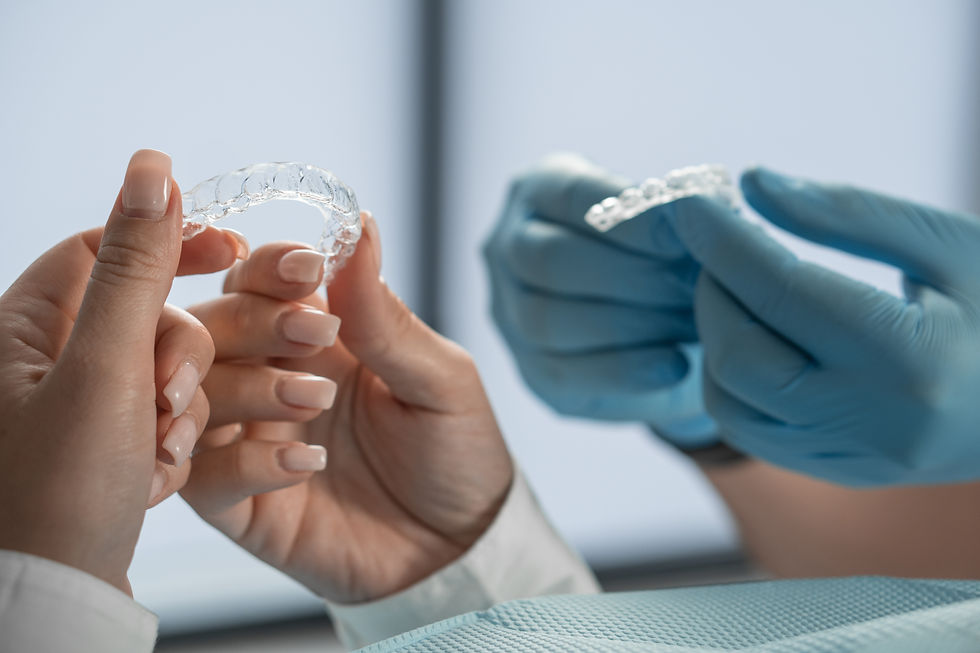
What the Literature Shows
An article published by the team at Avant Dental discusses the importance of proper extension and contouring in occlusal splints. The article explains that excessive flange extension can increase discomfort, speech interference, gagging, and overall patient dissatisfaction.
Similarly, clinical examples published in research comparing different splint designs demonstrate that hard stabilization splints with scalloped margins and controlled flange thickness are generally better tolerated by patients than bulky overextended appliances.
One published figure from:
“Three Different Splints” (ResearchGate clinical publication image set)
shows how properly designed hard occlusal splints maintain:
full occlusal coverage,
smooth anatomical contours,
shorter facial margins,
and controlled lingual extension.
These design principles are now commonly used in digital splint workflows.
Ideal Margin Position
For most hard printed stabilization splints, the ideal margin position is usually:
approximately 1–2 mm above the gingival margin on the facial/buccal side,
slightly longer on the palatal or lingual side for additional retention,
and scalloped naturally around the teeth rather than drawn as a straight line.
Overextending into the vestibule often creates:
excessive bulk,
cheek irritation,
difficulty speaking,
and poor patient compliance.
In digital design software such as Medit Splints or 3Shape Splint Studio, automatic generation tools tend to create fuller outer contours by default. Manual refinement is therefore often necessary to achieve a more comfortable appliance.
Why Digital Design Helps
Digitally designed splints allow clinicians and technicians to:
precisely control thickness,
customize retention,
reduce unnecessary material,
and create smoother anatomical transitions.
Compared to conventional hand-made appliances, digital workflows also improve reproducibility and consistency.
When combined with modern printable splint resins, digital splints can achieve excellent fit while remaining lightweight and comfortable.
Final Thoughts
A successful splint is not simply about strength — it is about patient comfort and wearability. Even the most accurate splint will fail if the patient avoids wearing it because it feels bulky.
Carefully positioned margins, conservative flange extension, and anatomical contouring are what separate a good splint from a great one.
As digital dentistry continues to evolve, mastering these small design details becomes increasingly important for predictable long-term results.

Comments