
Why More Dentists Are Recommending Splints for Bruxism and TMJ Problems

Updated: May 18
Teeth grinding and clenching — also known as bruxism — has become increasingly common. Many people do it without even realizing it, especially during sleep. Over time, this constant pressure can lead to worn teeth, cracked restorations, jaw pain, headaches, and muscle fatigue.
Recent scientific research continues to support the use of occlusal splints as one of the safest and most effective non-invasive ways to protect teeth and reduce stress on the jaw system.
What Is a Splint?
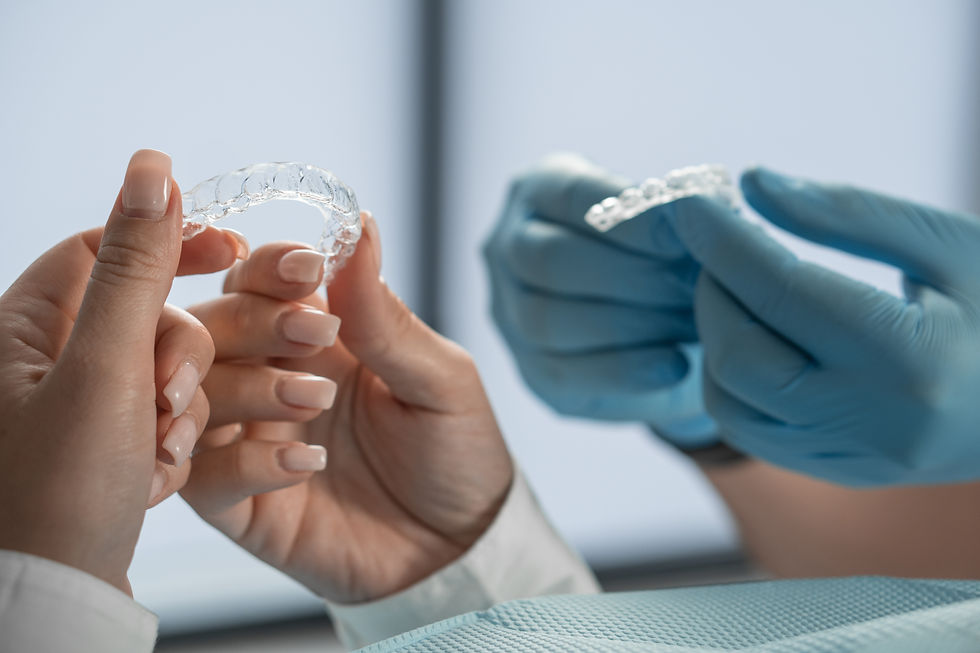
A splint, sometimes called a night guard or bite guard, is a custom-made appliance worn over the teeth. It creates a protective barrier between the upper and lower teeth and helps distribute biting forces more evenly.
Today, many splints are digitally designed and 3D printed, improving fit, comfort, and precision.
What the Latest Research Shows
A major systematic review and meta-analysis published in Medicine in 2025 found that occlusal splints may help reduce jaw pain, muscle tenderness, and functional discomfort associated with bruxism and temporomandibular disorders (TMD).
The review also highlighted that splints remain one of the most conservative treatment options because they protect teeth without permanently altering them.
Another recent publication discussing bruxism in implant-supported rehabilitations reported that splints can significantly reduce stress concentrations placed on implants and restorations during grinding and clenching.
Protection Against Damage
Bruxism places extremely high forces on the teeth — often much higher than normal chewing forces.
Over time, this may cause:
Tooth wear
Cracked teeth
Broken fillings
Chipped crowns
Implant overload
Jaw muscle fatigue
TMJ discomfort
Splints help absorb and redistribute these forces, reducing long-term damage and protecting both natural teeth and dental work.
Do Splints Cure Bruxism?
Current evidence suggests splints do not necessarily stop bruxism completely. Bruxism is often linked to stress, sleep patterns, neurological activity, and muscle function.
Instead, splints mainly:
Protect the teeth
Reduce excessive loading
Improve comfort
Help manage symptoms
Think of a splint as protective equipment for your teeth and jaw system.
The Rise of Digital Splints
Digital dentistry has transformed the way splints are made. Modern CAD/CAM workflows and 3D printing technologies allow for highly accurate and comfortable appliances with improved consistency compared to traditional fabrication methods.
Benefits of digitally produced splints include:
More accurate fit
Improved patient comfort
Faster turnaround times
Easy digital remakes
Better control over occlusion and thickness
For patients with severe grinding habits, precision is especially important because uneven pressure points can lead to discomfort or appliance failure.
Final Thoughts
Bruxism and TMJ-related problems can significantly affect comfort, sleep quality, and long-term oral health. While splints may not completely eliminate grinding habits, modern scientific evidence continues to support their role in protecting teeth, reducing overload on the jaw system, and improving patient comfort.

Sources & Scientific References
Primary Article
Assiri HA, Almuawi LF, Asiri BA, Abumelha ST, Alahmari RM, Hameed MS, Egido-Moreno S, López-López J.Bruxism treatment outcomes: A systematic review and meta-analysis.Published in Medicine (Baltimore), 2025.
Additional Supporting Literature
Shafiee E, et al.Bruxism in implant-supported rehabilitations: a narrative review.Published in 2025.
Comments